

20×20 vs 18×14: Which Screen Mesh Is Better for Florida Patios
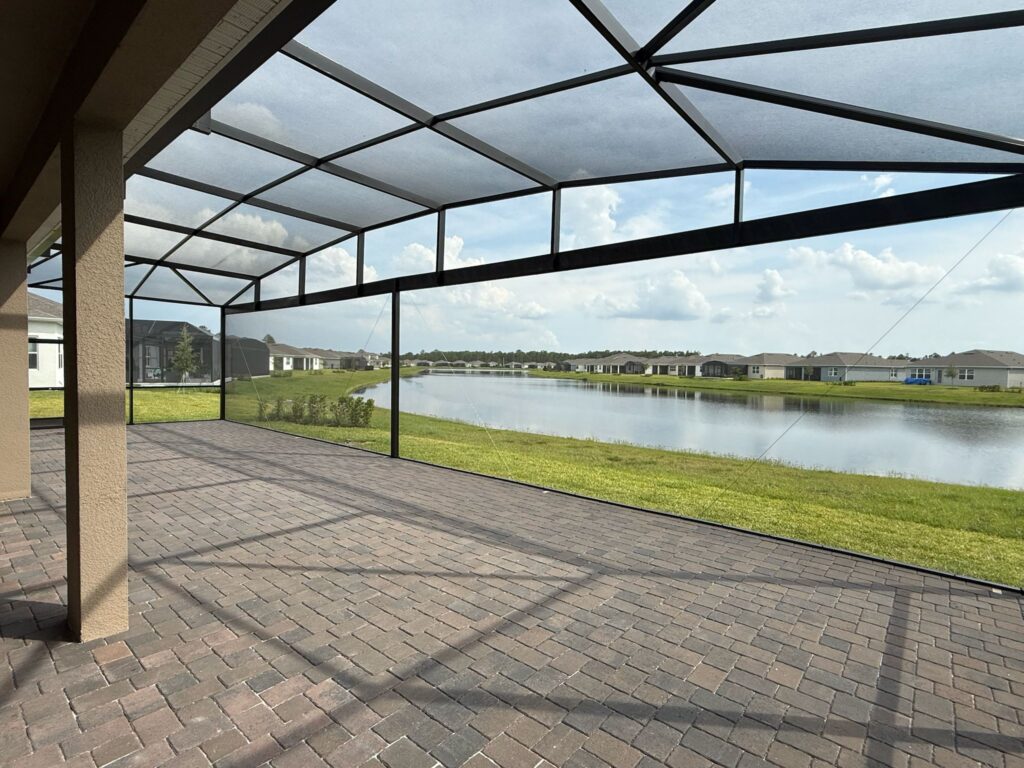
If you are planning to install or rescreen your patio enclosure, you might encounter terms like 20×20 or 18×14 screen mesh.
Many Florida homeowners are unsure what these numbers represent or which option is ideal for their patio.
Understanding the difference between these two common mesh types can help you choose the right screen for comfort, durability, and insect protection.
What Do 20×20 and 18×14 Mean?
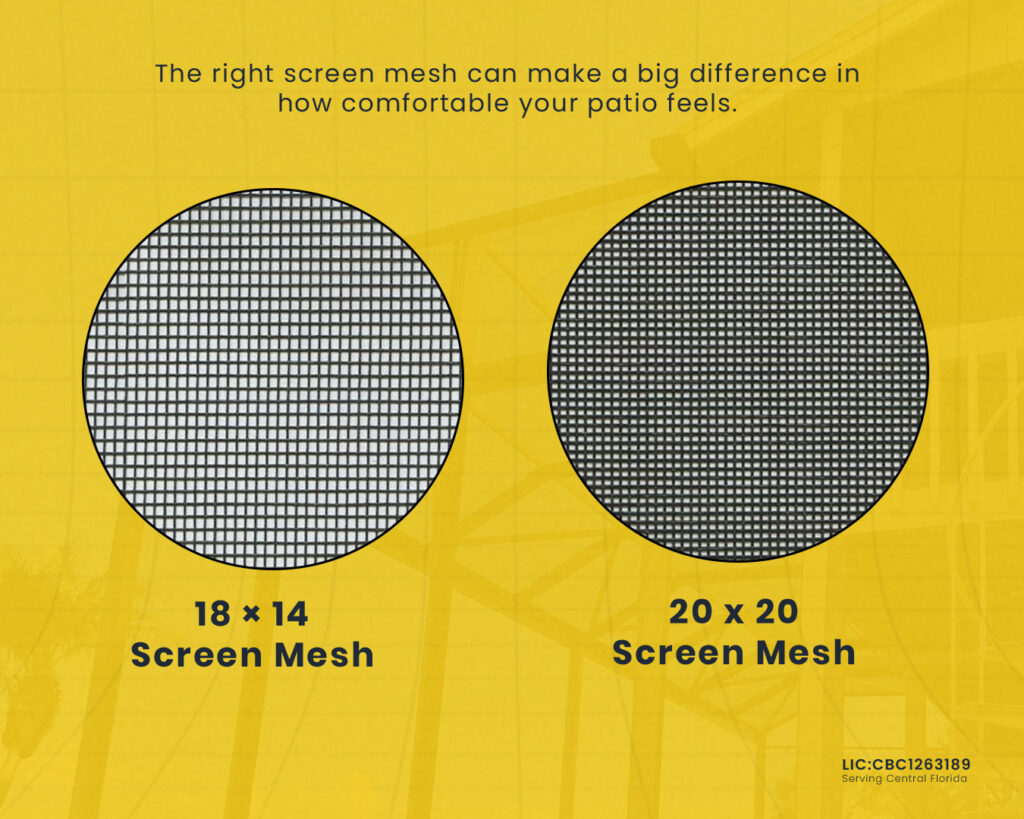
Screen mesh numbers refer to how many openings are in one square inch of the material.
• 20×20 mesh has 20 openings per inch vertically and horizontally
• 18×14 mesh has 18 openings in one direction and 14 in the other
Higher numbers indicate a tighter weave, which means smaller openings in the screen.
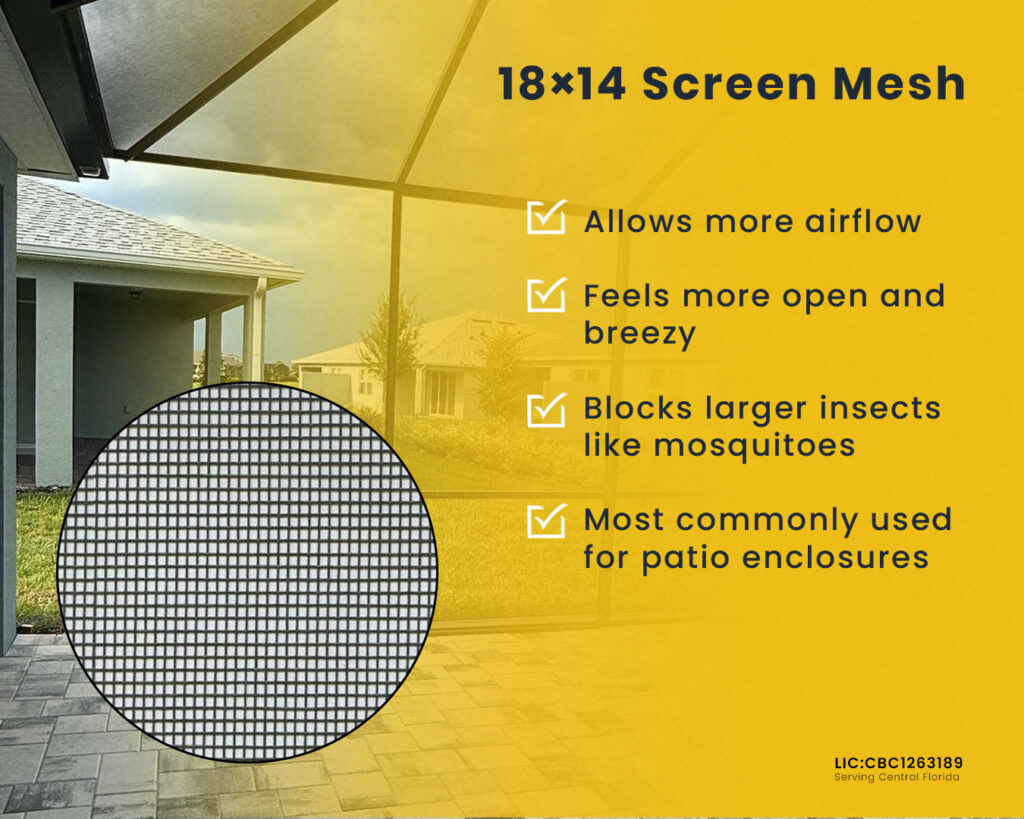
18×14 Screen Mesh (Standard Screen)
18×14 mesh is the most commonly used screen material for patio enclosures.
Benefits include:
- allows more airflow
- creates a more open outdoor feel
- provides protection from larger insects
- cost-effective option for many homeowners
This mesh type works well for homeowners who want a balance between airflow and insect protection.
20×20 Screen Mesh (Tighter Weave)
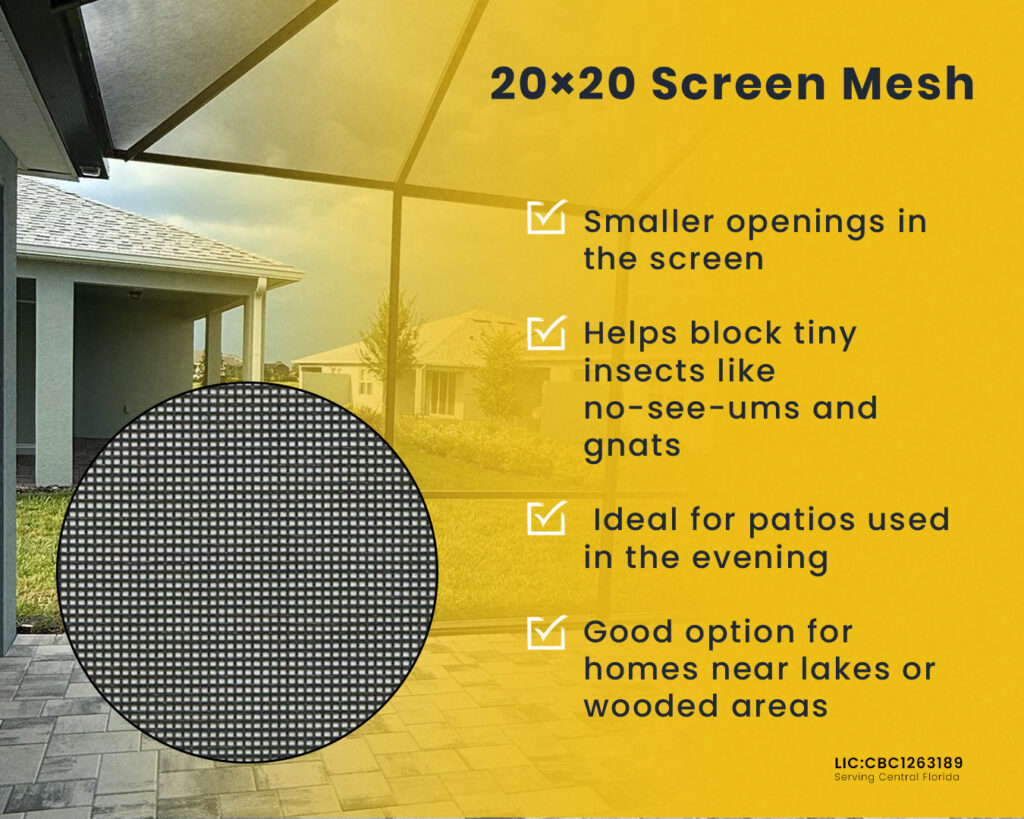
20×20 mesh features smaller openings that help block very small insects.
Benefits include:
- improved protection from no-see-ums and gnats
- more comfortable patio experience in the evenings
- ideal for homes near water or wooded areas
This option is popular among homeowners who want increased insect protection.
Key Differences Between 20×20 and 18×14 Mesh
Airflow
18×14 mesh allows slightly more airflow because of larger openings.
Insect Protection
20×20 mesh offers better protection from smaller insects.
Comfort
20×20 mesh may improve comfort if tiny insects are common in your area.
Which Screen Mesh Is Best for Your Patio?
Choose 18×14 mesh if:
- airflow is important
- you want a standard patio screen
- you want a cost-effective option
Choose 20×20 mesh if:
- small insects are a concern
- you use your patio frequently in the evening
- you want increased protection from tiny bugs
Why Screen Quality Matters
Regardless of the mesh size, choosing high-quality materials helps ensure long-lasting performance.
Chosen Screen Enclosures installs premium screen materials from Phifer, designed to perform well in Florida’s sun, humidity, and storms.
When Should You Consider Rescreening?
You may need new screen mesh if you notice:
- small tears or holes
- sagging screen panels
- insects entering your patio enclosure
- faded or brittle mesh
A professional rescreen can help restore the appearance and functionality of your patio enclosure.
Conclusion
Understanding the difference between 20×20 and 18×14 mesh helps homeowners make better decisions when rescreening their patio enclosures.
Both options offer benefits depending on your comfort needs and environment.
If you’re uncertain about which screen is best for your patio enclosure, Chosen Screen Enclosures is here to help.
Contact us today for a Free Professional Estimate and discover the perfect screen mesh for your patio enclosure.

One Comment